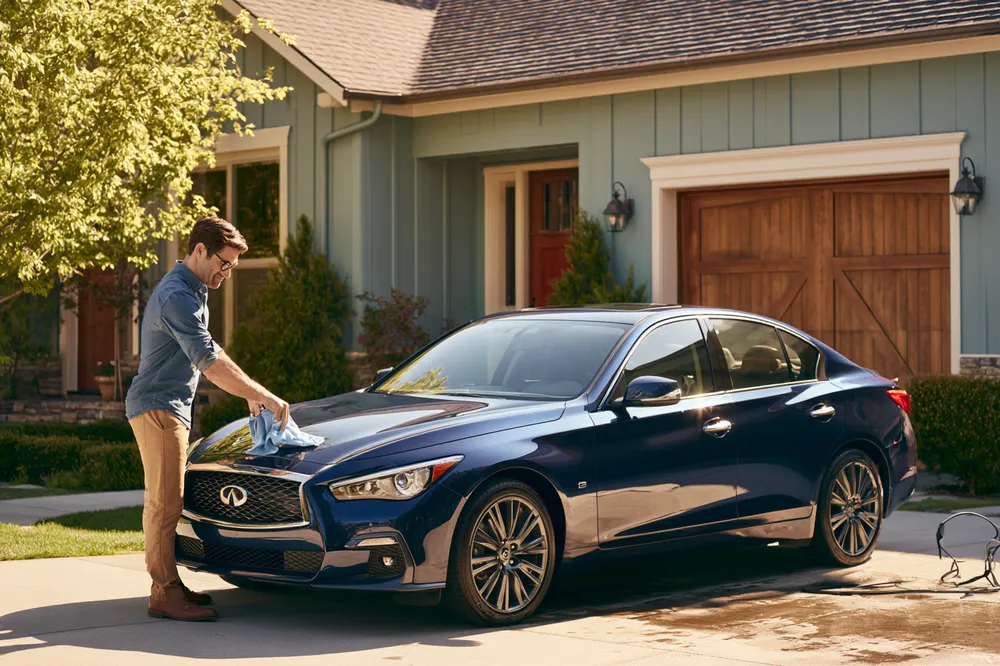
The Condition Gap Is the Money
Two identical cars — same year, trim, and mileage — routinely sell $1,500 to $4,000 apart, and the gap has a name: condition. Pricing guides publish separate values for clean, average, and rough condition, and the spread between adjacent grades on a mainstream used car runs $750 to $2,000 at each step. That spread is the entire business case for pre-sale repair: any fix that moves the car up one condition grade for less than the grade gap is arbitrage, and any fix that does not is charity to the next owner. This guide sorts the common repairs of this site's categories into payers and non-payers, prices the paperwork that multiplies both, and works the timing — because the same repair pays differently at two years before sale versus two weeks.
Repairs That Pay You Back
Buyers price with their eyes first, which is why cosmetic-adjacent repairs dominate the payer list. Paint and body: dents, scrapes, and mismatched panels trigger both appraisal-software deductions and buyer suspicion of history — the $500–$1,400 repair frequently recovers a $750–$2,000 grade step, the arithmetic our body and paint category runs from the financing side. Glass: a cracked windshield is a line-item deduction at trade-in (often quoted above street repair price) and a private-sale negotiation anchor; fixing it first reclaims the spread. Anything that lights the dashboard: a check-engine lamp costs disproportionately more than its usual cause, because buyers price the unknown, not the fault — a $150 sensor silencing a $900 fear is the best ratio in resale. Tires above the shabby line and brakes that pass the test-drive stop: both are inspection-visible, negotiation-proof spends. And the $150–$250 professional detail is the highest-ROI line on the list — not because clean is valuable, but because clean reads as cared-for, and cared-for is what the whole price is really for.

Repairs Buyers Ignore
The non-payer list saves as much money as the payer list earns. Deep mechanical refurbishment — new struts, a rebuilt AC, a fresh timing service — makes the car better without making it worth commensurately more, because buyers cannot see it and pricing guides do not grade it; do these repairs to keep the car, not to sell it. Upgrades price even worse: aftermarket wheels, audio, and accessories return dimes on the dollar and shrink the buyer pool. Perfecting a rough-grade car is the classic overspend — a vehicle with three problems does not climb grades by fixing one expensively; it climbs by fixing the cheap visible three. And the final months before sale are the wrong time for elective four-figure mechanical work of any kind: the payback window is gone. The discipline is symmetrical: spend where the appraisal looks, decline where it cannot.
The Paperwork Premium
Documentation is the multiplier on every dollar of the payer list. A maintenance folder — dated invoices, the oil-change rhythm visible, repairs with itemized lines, the windshield recalibration report our replacement-day guide tells you to keep — converts “seller says” into “records show,” and records support asking price the way comps support a house listing. Private buyers pay the premium most visibly: documented cars sell faster and closer to ask, because the folder answers the suspicion that drives every lowball. Vehicle-history services capture some of this automatically when shops report, which is a quiet argument for professional receipts over cash-job anonymity on resale-relevant work. Total cost of the premium: a $3 folder and the habit. It is the only item in this guide with no downside case.
Timing Repairs Against the Sale
The same repair pays differently across the ownership timeline. Two-plus years out: repair for your own use-value and let resale be the bonus — this is when the rust-clock body fixes and dashboard lamps get handled at leisure pricing. Six months out: run the payer list deliberately — body, glass, lamps, tires-if-shabby, detail — scheduled off-peak per the seasonal logic, financed on fixed terms if the month requires, because the recovery arrives at sale. Two weeks out: the detail, the folder, the bulbs, and nothing structural — late four-figure spends rarely recover. And selling season itself has a calendar: convertibles and sports cars in spring, AWD and trucks entering winter, everything better before a model-year rollover pushes your car one “year old” older. Matching the repair calendar to the sale calendar is worth several hundred dollars of pure sequencing.
The Lease-Return Special Case
Lease returns invert the usual logic: the buyer is contractually defined, the inspection is standardized, and the price of damage is the leasing company's rate card — rarely kind. Excess-wear charges for dents, glass damage, bald tires, and missing equipment routinely bill at 1.5–3× street repair prices, which makes the pre-return strategy mechanical: get the wear standards from your lessor (published, with dime-and-credit-card size tests), self-inspect sixty days out, and repair everything chargeable at your own shops and prices — PDR for dings, glass repair for chips, a matched respray only where panels exceed the standard. A $600 pre-return repair pass against a $1,500 rate-card invoice is the most predictable arbitrage in this entire guide, and sixty days is the window that makes financing it on short fixed terms trivial where needed.
Worked Examples by Vehicle Age
Three worked cases anchor the rules. The 4-year-old sedan, clean but for a scraped bumper and chipped windshield: $450 bumper respray plus $90 chip repair moves it from average toward clean — call it $540 spent against a $1,200 grade spread, plus faster sale. The 9-year-old SUV with a check-engine lamp, tired paint on the hood, and 40% tires: $180 sensor, $400 hood respray, skip the tires but disclose with a price adjustment — $580 against roughly $1,100 of combined deduction-and-fear recovery, while the $1,900 strut refresh it also “needs” stays undone for exactly the reasons above. The 13-year-old commuter in rough grade: the $150 detail, $60 of bulbs and touch-up, and the folder — $210 total, because at this tier presentation and records are the only levers with positive slope. In all three, the discipline is the same: price the grade gap first, then spend under it.
A Two-Year Value Plan
Condition is cheaper maintained than restored, so the real plan starts two years before any sale: the monthly five-minute checks and seasonal anchors that keep small damage from compounding, chips repaired the week they happen, the folder fed every visit, and the paint's rust-clock items fixed on the finance-and-schedule terms this site exists to make boring — written estimate, fixed payment previewed in the calculator, off-peak booking. Then the final-six-months payer pass, the two-week presentation pass, and the folder on the passenger seat at every showing. None of it is glamorous, and all of it compounds: the car that was never allowed to look neglected sells for the price of one that never was — which, by then, is simply the truth.
Financing Value Repairs: When Borrowing for Resale Actually Pays
This guide's arbitrage framing invites a sharper financial question than most repair content faces: does it ever make sense to borrow for a repair whose payoff is a sale price? The honest answer is yes, narrowly — when three conditions align. The repair must sit on the payer list (body, glass, dashboard lamps, presentation), the grade-gap recovery must exceed the repair cost plus total loan interest, and the sale must be near enough that the loan can be cleared from proceeds. Worked example: a $1,100 two-panel respray six months before selling, financed on a short personal loan, accrues roughly $60–$90 of interest before the sale — against a $1,500–$2,000 condition-grade recovery, the arithmetic clears comfortably, and the loan's payoff comes out of the buyer's check. The same respray on a 36-month term with no sale planned is just an expensive paint job wearing an investment costume; the term-to-horizon match is the entire discipline.
The lease-return section deserves the same treatment, because it is this page's cleanest financed-arbitrage case: a $600 pre-return repair pass against a $1,500 rate-card invoice is a defined gap, on a defined sixty-day deadline, with a contractually guaranteed payoff — conditions under which a short road loan application is closer to bridge financing than to consumer borrowing, and the road lending network's next-day funding fits the window easily. Price any version of these moves in the calculator with the interest line visible, subtract it from the expected recovery, and proceed only on positive numbers backed by the folder of documentation this guide keeps insisting on. Road loans used this way are a tool for capturing value the calendar would otherwise take; used without the arithmetic, they are the overspend section wearing better clothes. The spreadsheet knows which is which.
Bottom Line
Resale is condition-grade arbitrage with a paperwork multiplier: spend where appraisals look, decline where they cannot, and let the folder convert every receipt into asking-price support. Time the payer list six months out, run the lease-return pass sixty days out, and finance only the moves whose recovery exceeds cost plus interest — the narrow band where personal loans function as bridge money and road loans clear from the buyer's check. Everything else stays cash-tier or undone, because a personal loan that outlives the sale was never a value play. The car's price was always going to be negotiated; this guide's arithmetic just puts the negotiation two years ahead of the handshake, where it is cheapest to win.
Reader question worth appending: does an active loan on a repair complicate selling the car? Not mechanically — a personal loan here is unsecured, so no lien touches the title and the sale proceeds however you like; only vehicle-secured debt creates payoff paperwork at transfer. Buyers never see a personal loan, lenders never see the buyer, and the title stays clean throughout — a personal loan simply is not part of the transaction. The graceful move is still clearing any personal loan from sale proceeds, per the term-to-horizon rule above, and a personal loan repaid at sale closes the books on the whole repair chapter. The trap is the opposite arrangement: rolling repair costs into vehicle-secured refinancing deepens negative equity and does encumber the title — the structural comparison that makes unsecured road loans the resale-friendly instrument, and the reason road loans keep appearing in a guide about selling cars. Sell free, pay off promptly, and a personal loan leaves no trace the buyer could ever find — which is more than any personal loan alternative secured against the title can say.
Keep Reading

What Car Dent Repair Really Costs
The four variables behind every dent quote, with honest ranges.

The Seasonal Car Care Checklist
The maintenance rhythm that keeps condition cheap to keep.